I went to see Versailles. But the opera house stopped me

David Bird • July 7, 2026

I expected Versailles to be the one. It wasn't.

I was in Paris last week - a proper week off, no agenda, just wandering. Versailles was on the list. I went, I was impressed, I moved on. But it was the Palais Garnier that I kept coming back to. Still thinking about it now, if I'm honest.

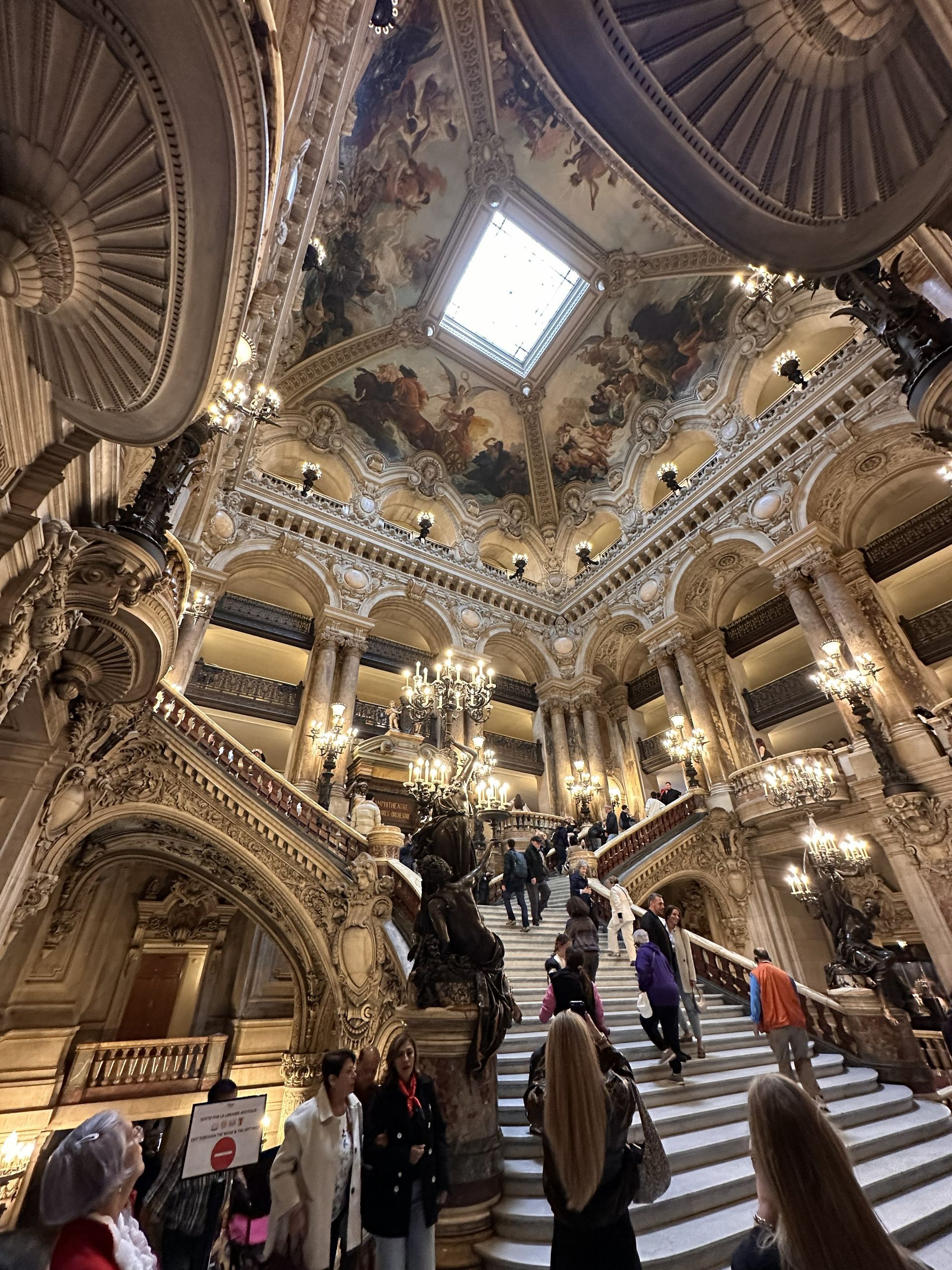
If you haven't been: it's Charles Garnier's opera house, built in 1875, Napoleon III style. The sort of building that doesn't believe in leaving a single surface undecorated. Gold leaf, marble, frescoes, chandeliers the size of small cars. The Grand Staircase alone - white marble, red and green balustrades, thirty-metre vaulted ceiling - had me standing there longer than I'd admit.

But it was the Grand Foyer that stopped me completely.

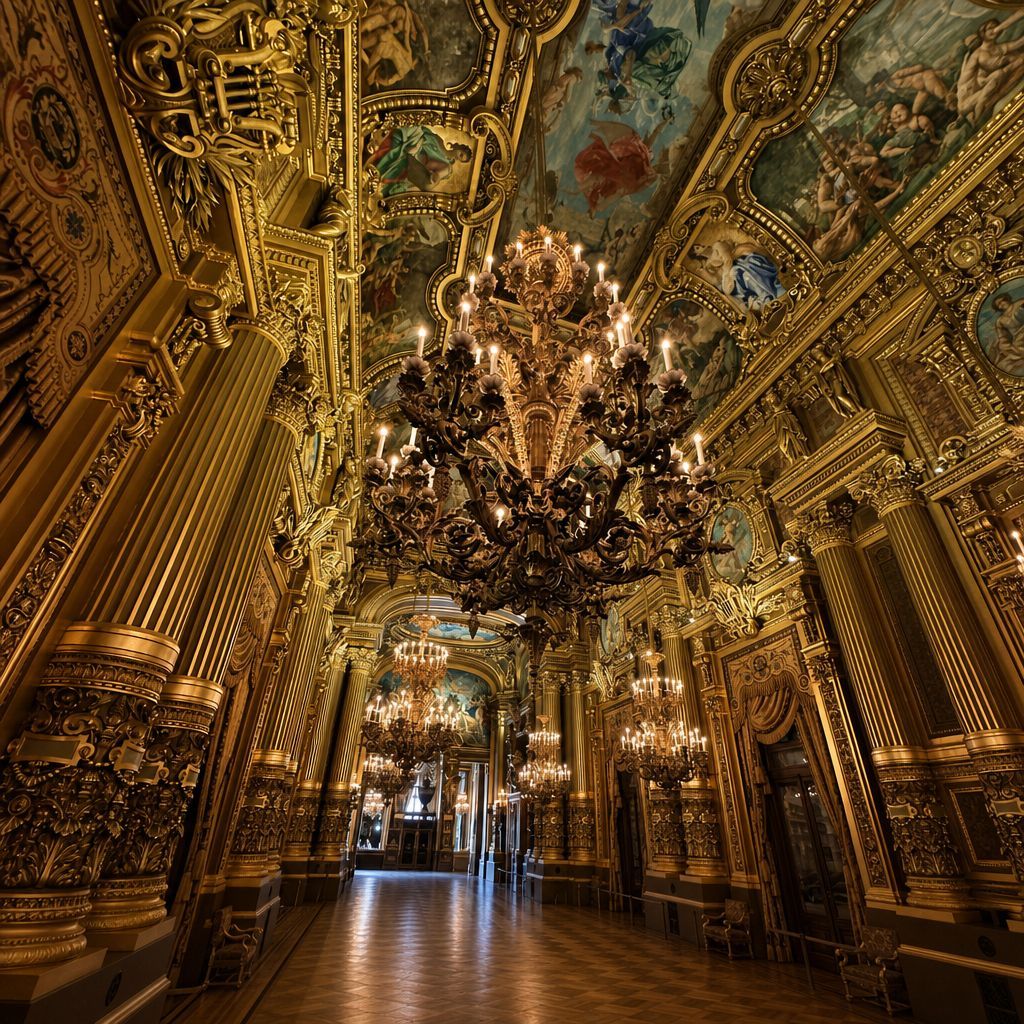
Fifty-four metres long. Ceiling eighteen metres high, covered entirely in Paul Baudry's frescoes - allegories of music, painted between 1866 and 1874. Mirrors everywhere. Light bouncing off gilded pilasters and chandeliers Garnier designed himself. People compare it to Versailles' Hall of Mirrors. I can see why - the proportions, the mirrors, the gilt - but this felt different. More theatrical. More layered. More interested in making you feel something than simply impressing you.

Your eye doesn't settle. It keeps moving - ceiling to mirrors to frescoes to marble columns to chandeliers and back again. I stood there for forty minutes. Could've stayed longer

  • When excess somehow isn't excessive

On paper, the Palais Garnier shouldn't work. Garnier mixed Baroque, Renaissance, bits of Palladio, modern iron frameworks. Combined white marble, red marble, onyx, porphyry, gilded bronze. It's an architectural free-for-all. It should collapse under its own weight.

It doesn't.

The Napoleon III style followed one principle: leave no surface without decoration. There isn't a single surface that isn't carved, painted, gilded, or inlaid with something. And yet - somehow - it holds together. Every element seems to serve the whole. Nothing's competing. Everything's contributing. The mirrors amplify the light from the chandeliers. The frescoes draw the eye upward. The marble columns create rhythm along the length of the room.

It's excessive, yes. But it's coherent excess.

That's worth thinking about in any design context, actually. It's not the amount of decoration that creates visual noise - it's decoration without a clear sense of purpose. Garnier knew exactly what he was building: a space for spectacle, for Parisian society to parade during the interval, to see and be seen. Every choice serves that. The height makes you feel small and grand at once. The mirrors mean you're always aware of other people. Baudry's frescoes depicting key moments in music history remind you that you're somewhere that matters.

It's not decoration for decoration's sake. It's decoration in service of an experience. And once you have that clarity - once you know what a space is really for - the choices become much less complicated.
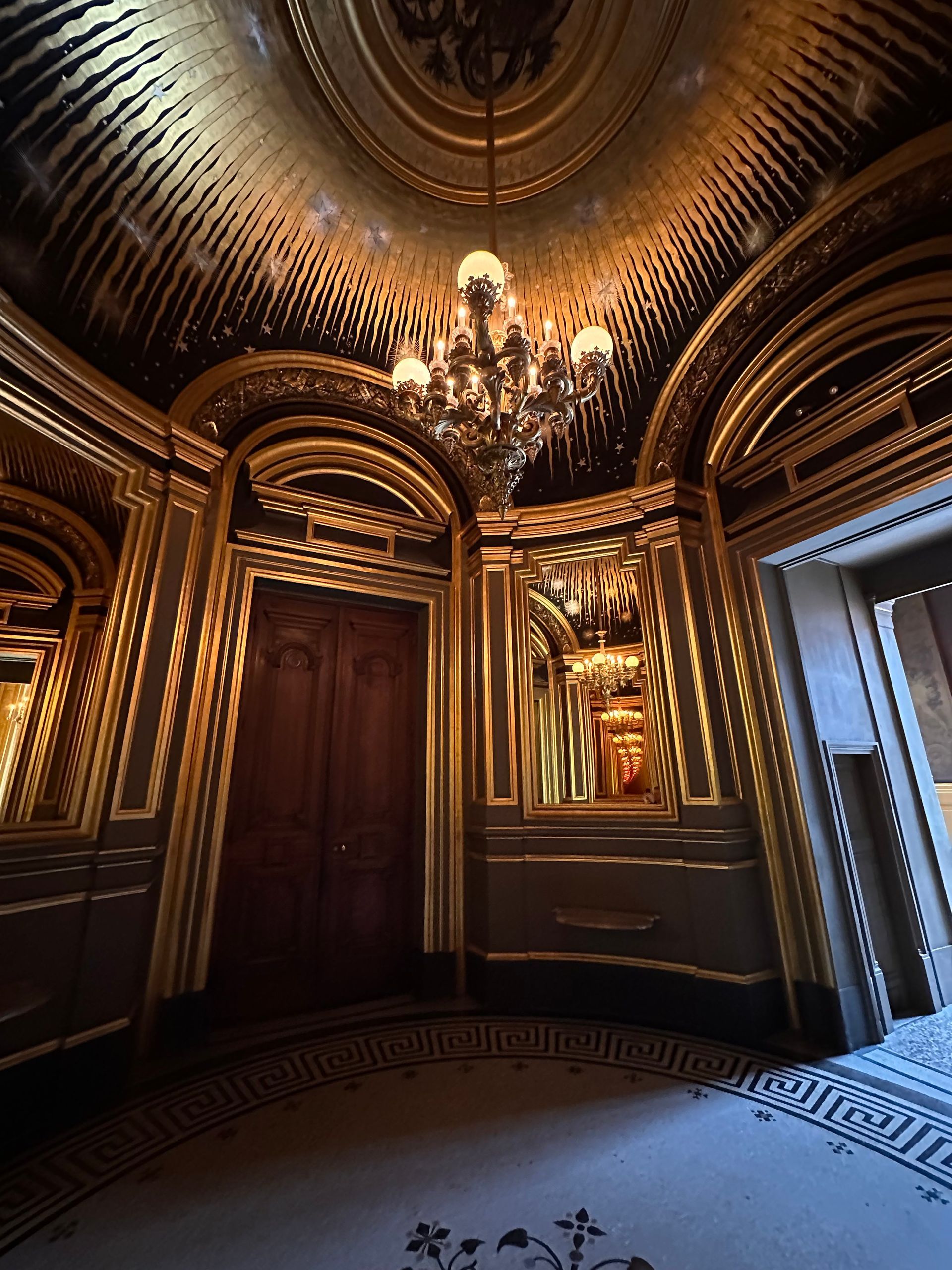
  • The details that stay with you

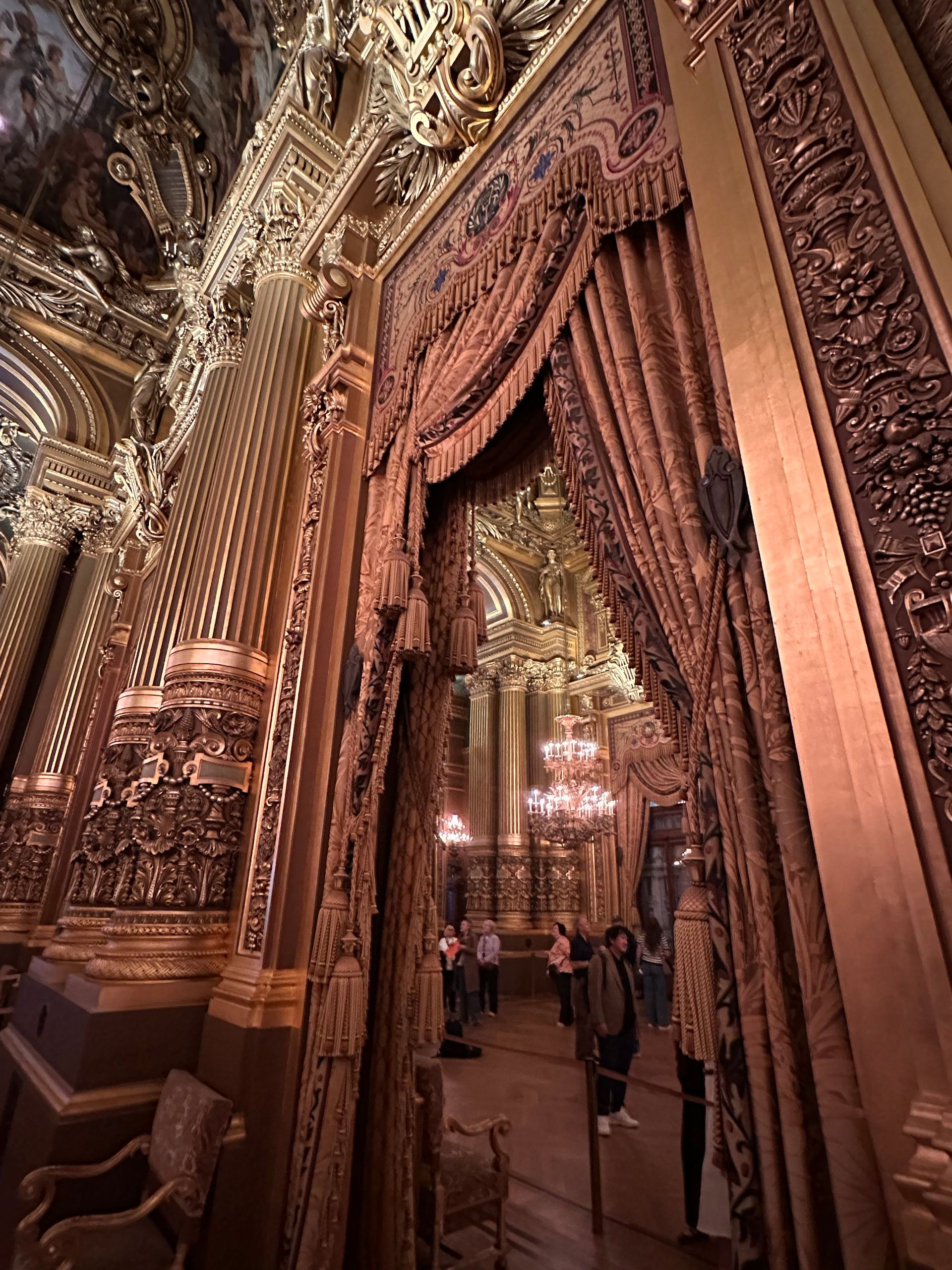
The mirrors aren't just for show. They double the space visually, create sightlines across the room, make a crowd feel like an event. Standing there, you see yourself reflected from multiple angles alongside everyone else. It's deliberately social - the room was designed for that.

Baudry's frescoes have hierarchy. The central painting is an allegory of Music - that's where your eye goes first. The smaller surrounding paintings show comedy and tragedy. You don't see everything at once. Your eye moves through it, which keeps you in the room longer than you planned.

The colour palette is richer than you'd expect, but not chaotic. Yes, there's gold everywhere. But the marble introduces white, red, green. The frescoes bring deep blues, soft pinks. There's a thread running through it that keeps everything from tipping into visual noise.

And it doesn't feel static. Even after forty minutes, I was still noticing new things. A carved detail on a column capital. The way light from the windows shifts the tone of the gilt as clouds pass. The rhythm of the painted medallions along the cornice. Buildings like this aren't meant to be taken in at a glance - they're designed to reward time.


  • What surprised me

I expected to be impressed. I wasn't expecting to be moved - well, not quite moved, but something close to it. There's something about standing in a space that's this committed to its own vision.

Garnier didn't hedge. He didn't tone it down. He built exactly what he wanted to build - a monument to opera, to spectacle, to the cultural life of 19th-century Paris - and trusted that if he did it well enough, it would hold. A hundred and fifty years later, it still does.

It's not subtle. It's not minimal. It's not restrained in any way. But it's honest. You know exactly what it's trying to be, and it achieves that without apology.

That's rarer than it sounds.


If you're in Paris, go. Give yourself more time than you think you need - I thought an hour, I could have spent the whole day.


By David Bird June 30, 2026
Many people choose a fabric they love and then end up with a blind they don't.
By David Bird June 15, 2026
Where to start....