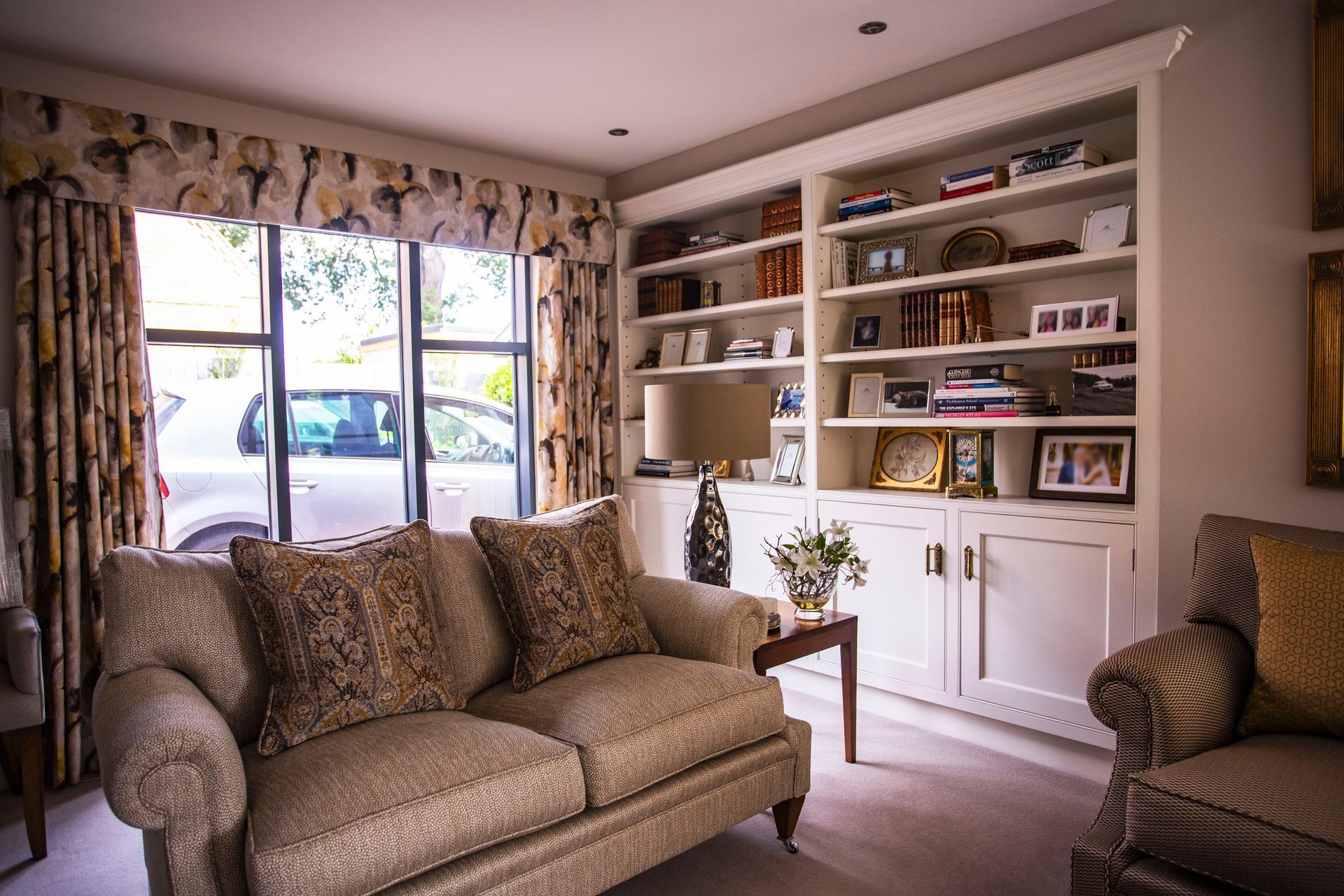
I had a call last week from someone who wanted to redo their sitting room. They'd seen a fabric they liked. Had a colour scheme in mind. Knew exactly what sofa they wanted. "So what do you actually do in there?" I asked. Long pause. "Sorry?" "The sitting room. What do you use it for?" Turns out they hadn't really thought about it. Which is fair enough - most people don't. But that's where every good design project has to start. Not with the sofa. Not with the colour scheme. With the brief.
The brief isn't a formality. If you get the brief right - and I mean really right - the rest of the process becomes straightforward.
Every choice you make after that point gets tested against one question: does this fit what we're trying to create here? Fabric finishes, paint colours, lighting, furniture layout, even the light switches - if you know what the room needs to do and how it needs to feel, the decisions become easier. Not because there's only one right answer, but because you've got a clear way of working out which options actually work. If you haven't got the brief right, you don't know where you're going. You're just making choices and hoping they add up to something coherent. They rarely do. What "getting the brief right" actually means is not complicated. It's just thorough.
Start with function. What's the room for?
A sitting room sounds obvious until you start asking questions. Is it a family space - somewhere you'll be every evening, kids doing homework on the floor, dog on the sofa, television on most nights? Or is it a formal room - kept nice for when people visit, used maybe twice a week? Is it both? Some families during the week, entertaining at weekends?
How many people does it need to seat comfortably? Four? Eight? Twelve for Christmas? Do you watch television in there, or is that somewhere else? Do you read in there? If so, where's the natural light during the day, and where do you need task lighting in the evening?
Is it a morning room or an evening room? North-facing or south-facing? That changes everything about how you light it and what colours will work. Do you eat in there - informal suppers on trays - or is dining strictly in the dining room? Where do people actually sit when they're in there? Everyone assumes they'll use the whole sofa, but often there's one seat that gets used and the rest are for show.
Those questions matter. Not because I'm being difficult. Because the answers tell you what the room needs to be, and that tells you how to design it.
Function determines everything else. Let's say you've got a sitting room that needs to work for family every evening and entertaining at weekends. That's two different briefs in one space, which means everything you choose has to work for both.
Seating:
You need enough for family day-to-day - probably a sofa and a couple of chairs - but also the ability to seat eight or ten when people visit. That might mean occasional chairs that can be pulled in, or a sofa that's large enough to actually seat three adults comfortably, not two-and-a-bit. Durability: Family use every day means fabrics that can take it. You can still have something beautiful - good fabric houses make plenty of hardwearing options - but you can't choose something that'll mark if someone sits on it in jeans straight from the garden.
Lighting:
This is where most people get it wrong. They put in one ceiling light and a couple of table lamps and wonder why the room never feels right. A room that works for multiple functions needs layered lighting. Ambient light for general use. Task lighting for reading. Accent lighting to make the room feel warm in the evening.
Dimmers so you can adjust depending on whether it's family film night or dinner guests. If you're entertaining, you want the room to feel inviting but not over-bright. If someone's reading, they need proper light that doesn't give them a headache after twenty minutes. One ceiling light doesn't do both.
Layout:
Where does conversation happen naturally? If you're entertaining, people need to be able to talk without craning their necks. If it's family use, does the layout let one person read while someone else watches television without the light from the lamp glaring on the screen?
All of this comes from the brief.
Not from what looks nice in a showroom. When the brief changes halfway through Sometimes clients don't know what they want until they start talking about it. I had someone a few years ago who came in wanting a formal sitting room. Elegant. Sophisticated. Somewhere to entertain.
We got halfway through the brief conversation and she stopped. "Actually, I don't think we use it like that. I think I want it to be like that, but we don't really entertain formally. We have people over, but it's more... relaxed." So we started again. Same room, completely different brief. The fabrics changed. The lighting plan changed. The whole feel of the space changed, because what she actually needed was different from what she thought she wanted. That's fine. Better to realise it during the brief phase than six months later when the curtains are up and the room doesn't feel right.
Why this matters more than people think
I see a lot of sitting rooms that look beautiful but don't work. The sofa's too small for the number of people who actually use the room. The lighting's too bright or too dim or just in the wrong places. The layout looks good but no one can hold a conversation without perching awkwardly on the edge of a chair. That happens when someone starts with the aesthetic - "I want it to look like this" - and works backwards.
Good design starts with the brief. What does the room need to do? How do you actually live in it? What needs to happen in there for it to work? Once you know that, the aesthetic follows. You're not designing a beautiful room and hoping it fits your life. You're designing a room that fits your life and making it beautiful within that.
The sitting room brief checklist
If you're thinking about redesigning a sitting room - or any room - start here:
- Function: What will you actually do in this room day-to-day? How many people need to use it regularly? Is it single-purpose or does it need to work for multiple uses?
- Seating: How many people need to sit comfortably? Will that number change - everyday vs entertaining? Where do people naturally sit? (Watch for a week - you'll see patterns)
- Lighting: Is this a morning room, afternoon room, evening room - or all three? What activities need task lighting? (Reading, hobbies, working) Do you need adjustable lighting for different moods? Where's the natural light and how does it change through the day?
- Durability: Who uses this room? (Adults only, children, pets?) How much wear will it get? Do you need fabrics that can be cleaned easily?
- Atmosphere: How do you want it to feel? (Relaxed, formal, cosy, spacious?) Is that feeling consistent or does it need to shift? (Family space weekdays, entertaining weekends?)
- Practical constraints: Is there anything that has to stay? (Fireplace, built-in storage, awkward radiators?) Are there any problem areas? (Dark corners, cold spots, traffic flow issues?)
Answer those honestly and you've got a proper brief. Everything else follows from there.
When every choice relates back to the brief,once the brief is clear, every decision gets easier. You're not choosing fabric because it's beautiful - though it should be. You're choosing it because it's beautiful and it works for how the room will be used. You're not positioning furniture because it looks balanced. You're positioning it because it creates the conversation areas you need and the traffic flow that makes sense. You're not adding lighting because every room needs three lamps. You're adding specific lighting because you know someone reads in that corner after dinner and the ambient light isn't enough.
The brief is the thing you keep coming back to. Does this choice fit? Does it serve what we're trying to create? If the answer's no - or if you don't know - then you haven't got the brief right yet. Go back. Ask more questions. Watch how you actually use the space for a week. Because getting it right at the start - understanding what the room needs to be before you make a single aesthetic decision - is what makes the difference between a room that looks good in a photograph and a room that works for the next twenty years.
By spending more time on the brief and considering these questions you will get it right for you. That is the professional approach.